

Some news I’m still grinning about: our team won the Seoul Tech Impact Hackathon 2023. We built a geolocation app for finding street food vendors in Korea.
The idea#
Street food vendors in Korea don’t have addresses. A pojangmacha sets up wherever it sets up, and unless you already know the spot, you won’t find it online. Our app puts vendors on the map — literally. That’s good for the vendors, and good for anyone hunting down late-night tteokbokki.
The weekend itself#
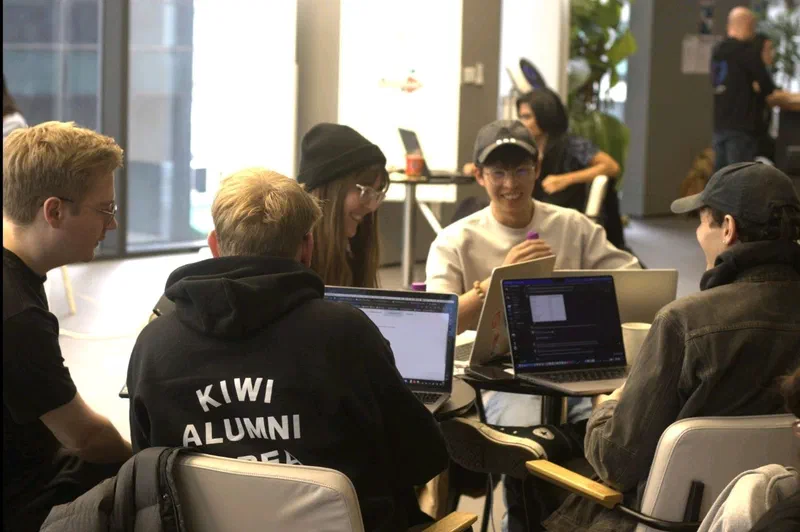
The hackathon was hosted by Lunit Global, who put up the office space. Teams from all sorts of backgrounds, most of us working straight through the night, and organisers who kept everything running smoothly. The kind of event where you look up and it’s suddenly 4am.
The team#
The team was Sharon Levy, Jonothan Sue, me, and Tiaan van der Riel. Everyone brought something different, so splitting the work was painless. The pitch landed with the judges, I think, because the problem doesn’t need explaining — say “street food vendors are invisible online” out loud and the solution suggests itself.
What’s next#
We’re working on getting the app into the stores. It started as a weekend project, but the problem it solves is real enough that stopping now would feel like a waste.
If it’s your first hackathon#
If you’ve never done a hackathon, I’d recommend it. You build something fast with people you’ve never worked with, find out how you actually handle pressure, and once in a while you walk out with something worth continuing. Worst case, you get a weekend of free snacks and a working prototype nobody asked for.
A few things worth knowing before you go:
- Pick a problem you can explain in one sentence. If the judges spend the first minute working out what the problem is, they aren’t listening to your solution.
- Split the roles early, ideally in the first hour: who builds, who designs, who owns the pitch. Working that out at 2am costs far more.
- Build the demo path first. Get the one flow you’ll show on stage working end to end before you add anything else.
- Rehearse the pitch out loud, with the live demo, at least twice. Pitches nearly always run longer than you think.
- Sleep a little. Even a couple of hours makes the morning’s decisions, and the pitch, noticeably better.