
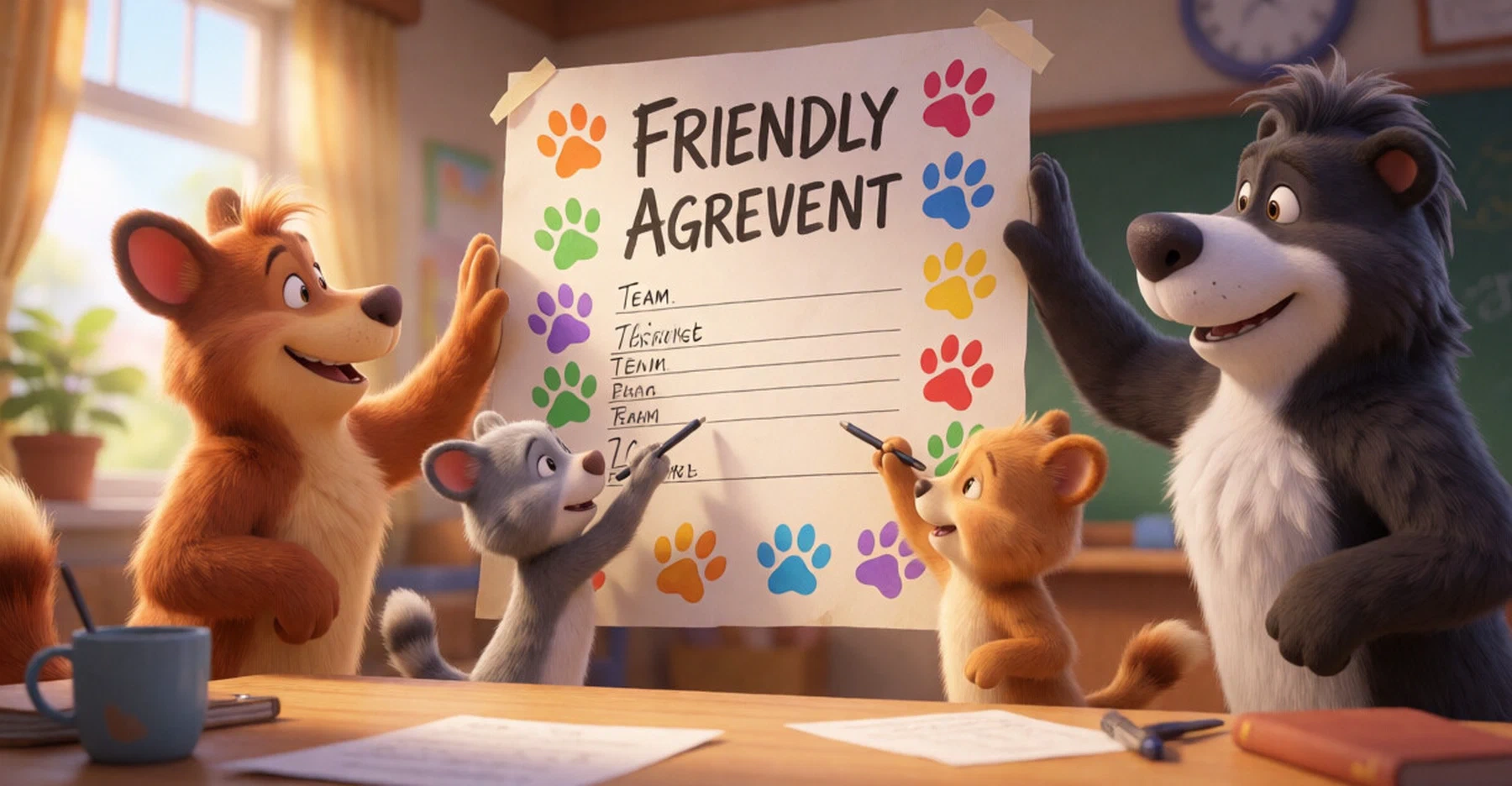
A few months into managing a dev team, I’ve worked out that most of the friction I deal with isn’t technical. It’s people running on different unspoken assumptions: how fast a code review should turn around, what “done” actually means, whether it’s rude to ping someone twice on Slack. Nobody’s wrong. We just never agreed on the rules.
The boring name for the fix is team norms. The Center for Creative Leadership defines them as “a set of rules or operating principles that shape team members’ interactions”, which sounds like HR paperwork but really just means writing down the things everyone assumed were obvious.
The research that sold me#
Google’s Project Aristotle studied 180-odd of their own teams to work out what made the good ones good. The answer surprised them: who is on a team matters far less than how the team works together. You can stack a team with talent and still get mediocre results if the working agreements are a mess.
The study identified five dynamics that set the strong teams apart: psychological safety, dependability, structure and clarity, meaning, and impact. Psychological safety, being able to ask a dumb question or own up to a mistake without paying for it, did the heaviest lifting. The numbers attached to it are hard to argue with: 43% higher performance variance explained, 19% higher productivity, 31% more innovation, 27% lower turnover.
What I like about that list is that none of the five are personality traits. They’re all things a team can deliberately build, and norms are how you build them.
What norms look like day to day#
Meetings are the easiest place to start because the bad habits are so visible. Agendas go out in advance, meetings start and end on time, and people summarise what they heard before they argue with it. I’m fond of the blunt version of the agenda rule: no agenda, no meeting.
Communication norms matter more but are harder to see. Mine boil down to: over-communicate by default, write decisions down where everyone can find them, and don’t let meetings be the only channel. Some people will never speak up in a room of eight, so go and ask them directly. There’s plenty of evidence that teams with varied perspectives beat homogeneous ones, but only if those perspectives actually get said out loud.
For disagreements: assume good intent, argue with the problem rather than the person, and dig for what people actually need instead of the positions they’ve staked out. The rare fight that won’t die gets a neutral third party.
How to set them without it turning into bureaucracy#
The approach CCL recommends starts from experience rather than theory, and it’s the one I’d use. Everyone describes the best and worst teams they’ve been on, the group digs into what made each of them that way, and the patterns become proposals: concrete behaviours for this team, debated and agreed rather than handed down. Then decide up front what happens when someone breaks one (including when it’s the manager), write the norms somewhere visible, and revisit them now and then.
The one rule I’d add: start with three to five. Norms only work once they’re habits, and nobody builds ten habits at once.
Where it falls apart#
The fastest way to kill norms is a leader who ignores them. If I skip the agenda rule because I’m busy, the team clocks it immediately and the whole exercise becomes theatre. Consistency from whoever’s in charge matters more than the wording of any norm.
A few other traps worth watching: new hires learning the norms as folklore instead of hearing them explicitly during onboarding, global teams assuming their baseline is everyone’s baseline (make the implicit explicit), and people who see the whole thing as process for its own sake. For that last group, involving them in writing the norms works far better than lecturing them.
It also helps to know where norms actually get reinforced. Research on high-performing teams keeps finding the same three habits: proper kickoffs, regular one-on-ones, and retrospectives. That’s where agreements get made, tested and quietly renegotiated, not in a policy doc.
I don’t think norms are magic. But Google’s data points the same way as my experience so far: how a team works together beats who’s on it. So we’re keeping ours short. A handful of agreements, written where everyone can see them, reviewed when they stop being true. Ask me in six months whether they stuck.